How to Find Teaching Jobs in the UK (2026 Guide)


Finding teaching jobs in the UK in 2026 can feel overwhelming, especially if you’re a teaching assistant trying to navigate an education system that continues to evolve.
Schools are facing increasing pressure, with tighter budgets and pupils needing more support than ever before. Despite this, demand for teaching assistants continues to grow year after year.
So why does the job search still feel so difficult?
The reality is that many people aren’t struggling because they lack experience or ability. They’re struggling because education recruitment can feel complex and difficult to navigate behind the scenes. This blog is here to help change that – not with generic advice, but with practical insights, industry context, and a step-by-step approach designed specifically for teaching assistants and school support staff navigating the UK job market in 2026.
Why 2026 Is a Pivotal Year for Teaching Jobs in the UK
Before diving into applications, it’s important to understand the bigger picture. UK education is going through a quiet but significant shift. Teacher shortages continue to make headlines, but what’s less talked about is how much schools now rely on teaching assistants to keep classrooms running.
Across the country, schools are seeing:
- Increased SEND and SEMH needs
- Growing focus on inclusion and wellbeing
- Rising class sizes and stretched teaching staff
- Greater demand for one-to-one and small-group support
In response, teaching assistants have become central to day-to-day learning, not an add-on, but a necessity. This means that while competition can feel high, opportunities for teaching assistants have never been more varied or more important.
The UK Education Landscape in 2026
While these statistics highlight real challenges for schools, they also reflect growing opportunities for teaching assistants. As more pupils require additional support, schools are actively seeking committed, compassionate individuals who can make a genuine difference in the classroom.
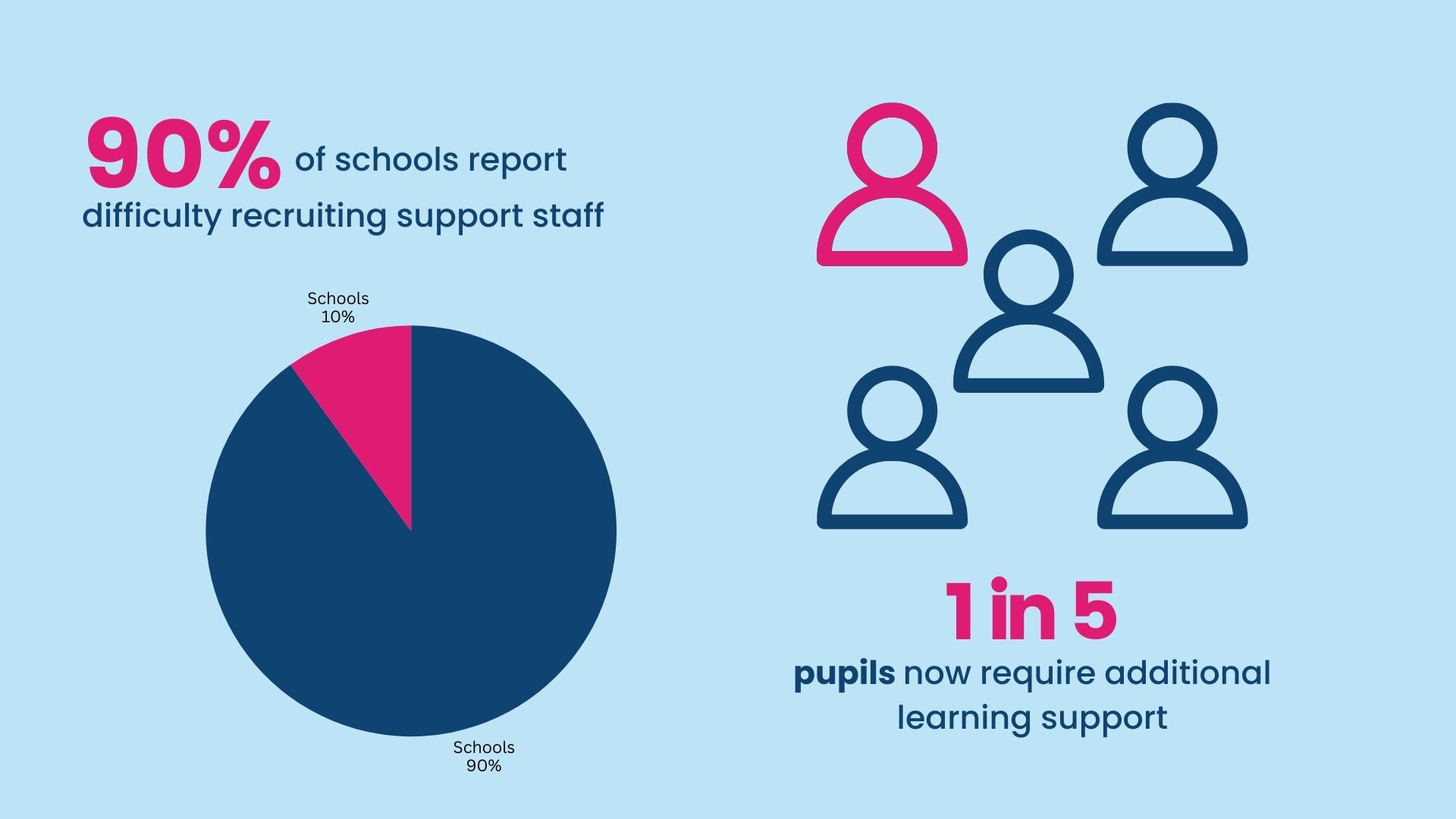
Infographic showing education support staff demand in UK schools.
Step 1: Get Clear on the Teaching Job You Actually Want
One of the most common mistakes candidates make is searching too broadly. Typing “teaching jobs UK” into a job board might feel productive, but it often leads to frustration. Instead, clarity is your biggest advantage.
For teaching assistants, it helps to ask these questions:
- Do I want a general TA role or a SEN-focused position?
- Am I looking for full-time stability or flexible supply work?
- Which age group do I connect with most?
- Do I thrive in structured classrooms or more pastoral environments?
Teaching assistant roles vary hugely from school to school. Knowing what suits you doesn’t limit opportunities, it helps the right ones find you.
Step 2: Understand How Schools Really Hire Teaching Assistants
Here’s something many candidates don’t realise schools don’t recruit in the same way most industries do. Headteachers and SENCOs are busy, and when a vacancy comes up, especially for teaching assistant roles, they often need someone quickly. That’s why many schools work with specialist recruiters like Prospero Teaching, who already understand their setting, pupils, and expectations.
This means:
- Many teaching assistant jobs are filled before being advertised publicly
- Schools rely on trusted agencies for pre-vetted candidates
- Supply and temporary roles often turn into long-term placements
Understanding this behind-the-scenes reality gives you a real advantage.
Where Teaching Assistant Jobs Are Really Found
Education Recruitment Agencies
Specialist agencies like Prospero Teaching match teaching assistants to schools based on experience, personality, and availability, not just CV keywords.
Supply Work That Becomes Permanent
Many long-term roles begin as short-term placements, giving schools confidence before offering contracts.
School Networks and Referrals
Schools often return to agencies they trust rather than advertising widely.
Step 3: Build a Teaching Assistant CV That Feels Human
A good teaching assistant CV doesn’t try to sound impressive; it shows that you understand what schools actually need.
Schools want to see:
- Classroom support experience
- Confidence supporting behaviour and learning
- Exposure to SEND or additional needs
- Strong communication and teamwork
Rather than listing tasks, focus on impact. For example: Supporting small groups with literacy interventions, helping pupils build confidence and engage more positively in lessons.
Why Transferable Skills Matter More Than You Think
Many people hesitate to apply for teaching assistant jobs because they haven’t worked in a school before. Bust schools regularly hire teaching assistants from backgrounds such as:
- Care and support work
- Youth work and mentoring
- Nurseries and early years settings
- Sports coaching
- Psychology or social science degrees
If you’ve supported people, managed behaviour, or worked in emotionally demanding environments, you already bring valuable skills into the classroom.
Skills Schools Want in Teaching Assistants
Did you know that over 70% of schools prioritise attitude and adaptability over formal qualifications. Here are some of the important skills schools want in teaching assistants.
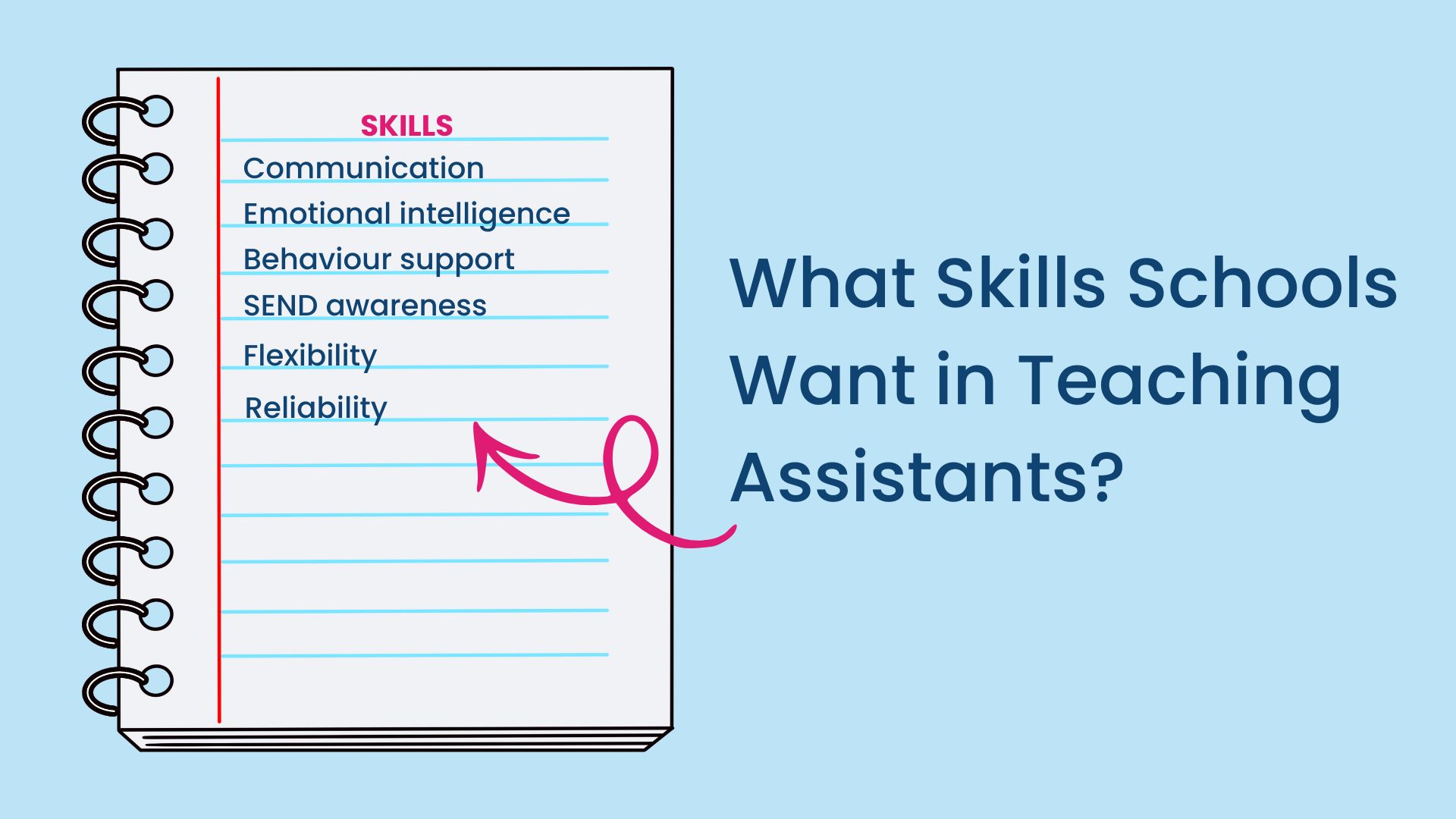
Teaching Assistant skills that schools are looking for
Step 4: Why Supply Work Is Often the Smartest First Move
Supply work doesn’t suit everyone, but for many teaching assistants, it’s a powerful stepping stone.
It allows you to:
- Get into schools quickly
- Build confidence in different settings
- Discover what environments suit you best
- Be seen by schools before permanent roles open
Many teaching assistants secure long-term positions simply by showing up, being reliable, and building trust.
Step 5: Interviews Aren’t Tests… They’re Conversations
Teaching assistant interviews are rarely about trick questions. Schools want to understand:
- How you support children who are struggling
- How you work as part of a team
- How you stay calm under pressure
They’re not expecting perfection. They’re looking for empathy, consistency, and willingness to learn. Approaching interviews as conversations, not interrogations, often makes all the difference.
Confidence Is Often the Missing Piece
Many brilliant candidates delay applying because they don’t feel “ready yet”. But confidence doesn’t come before experience, it grows through experience. If you care about pupils, stay calm, and show up consistently, schools will invest in you. Growth happens quickly in the right environment.
The Bigger Picture: Why Teaching Assistants Matter More Than Ever
In today’s classrooms, teaching assistants are often:
- The most consistent adult a pupil sees
- The bridge between learning and wellbeing
- A vital source of calm and continuity
As education continues to evolve, teaching assistants aren’t just supporting learning, they’re shaping it.
Finding Teaching Jobs in the UK Doesn’t Have to Be Hard
Finding teaching jobs in the UK, especially as a teaching assistant, isn’t about luck it’s about:
- Understanding how schools recruit
- Knowing where opportunities really come from
- Working with people who understand education and candidates
When you approach the process strategically, doors open faster than you might expect.
Wherever you are on your journey, good luck! The work you do matters, and the right role really is out there for you.
Whether you’re just starting out or looking for your next role, we’re here to support you.
Teaching Blog
No results found.....