


If you enjoy helping others learn and want a rewarding, flexible career, tutor jobs can offer an exciting pathway into education. Whether you want to tutor part-time alongside another role, work with schools, or build a long-term career supporting students, tutoring provides opportunities across a wide range of subjects and age groups.
But how do you actually become a tutor in the UK? Do you need qualifications? What skills matter most? And where can you find these jobs?
In this blog, we’ll explain the qualifications, skills and routes into tutoring, helping you understand what employers, agencies and families are looking for.
What Does a Tutor Do?
A tutor provides tailored learning support to help students improve understanding, confidence and academic outcomes. Unlike classroom teaching, tutoring is often delivered on a one-to-one basis or in small groups, allowing for more personalised support.
Tutor jobs can involve supporting:
- Primary school pupils with literacy and numeracy
- GCSE and A-Level students preparing for exams
- Students with SEND or additional learning needs
- University students requiring subject-specific help
- Adult learners developing professional or language skills
Tutors may work online, in person, through agencies, directly with families, or within schools and local authority programmes.
Do You Need Qualifications to Become a Tutor in the UK?
One of the biggest misconceptions about tutor jobs is that you must be a qualified teacher to start tutoring.
In the UK, there is no legal requirement to hold Qualified Teacher Status (QTS) to become a private tutor. However, qualifications and experience can significantly improve credibility and employability, particularly when applying for tutor jobs through education agencies or schools.
Qualifications That Can Help You Secure Tutor Jobs
While requirements vary depending on the role, many tutors have one or more of the following:
A degree in your specialist subject
For example, a maths tutor may hold a mathematics-related degree, while an English tutor may have qualifications in English literature, education or communications. Subject expertise builds trust with employers and parents.
Teaching qualifications (PGCE or QTS)
Although not essential for all tutor jobs, teaching qualifications can strengthen your profile, especially if you want to tutor GCSE, A-Level or specialist learners. QTS is typically required for maintained school teaching but is not a legal requirement for private tutoring.
A-Levels, GCSEs or vocational qualifications
Some entry-level tutor jobs, particularly in primary intervention or learning support, may accept candidates with strong academic backgrounds and relevant experience.
Tutoring or mentoring experience
Practical experience matters. Volunteering, mentoring, teaching assistant work, coaching or supporting learners informally can help strengthen applications for tutor jobs.
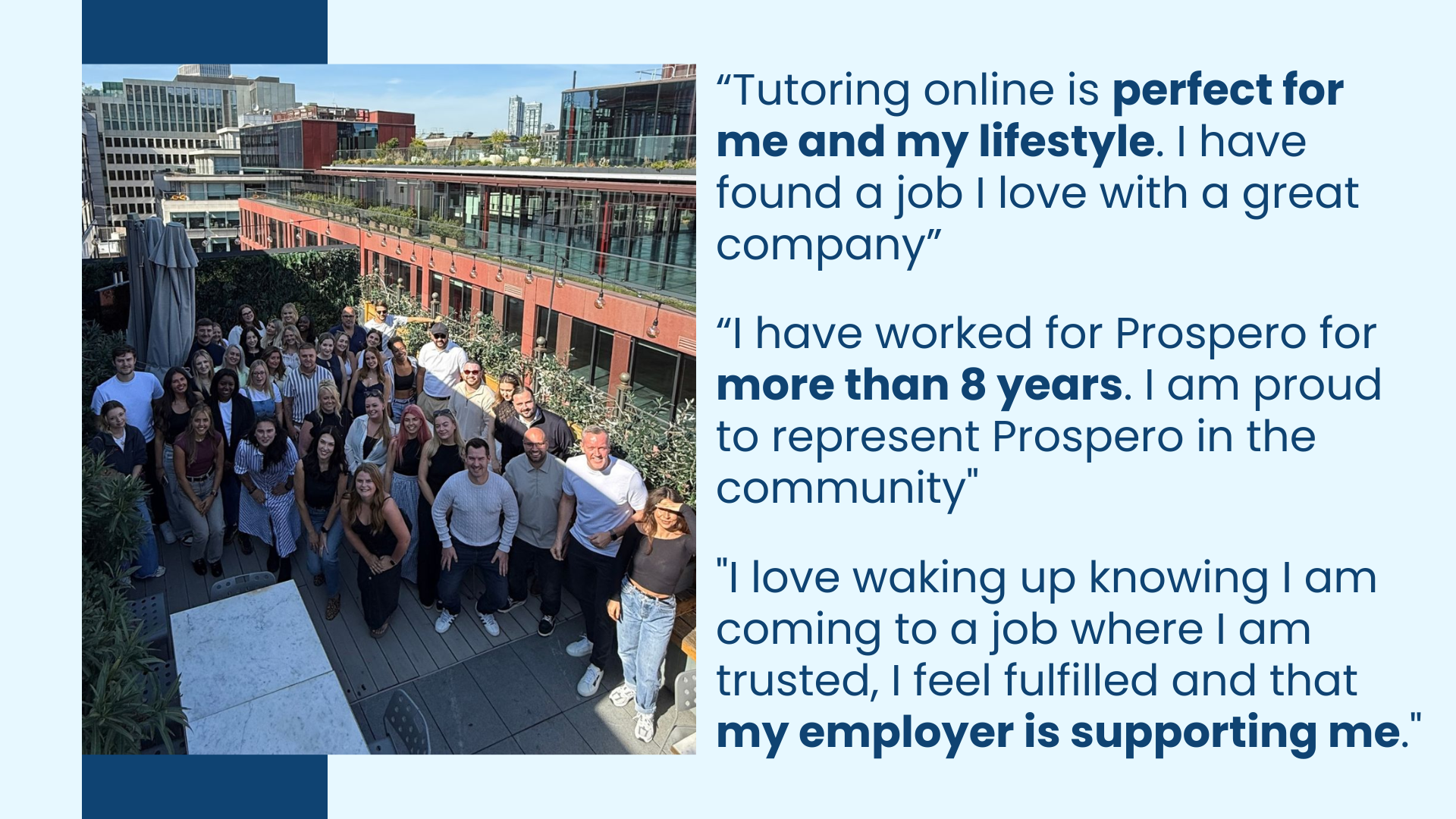
Prospero Teaching Reviews from our Tutors
Essential Skills Needed for Tutor Jobs
Subject Knowledge
Students and families expect tutors to have a strong understanding of their chosen subject and curriculum. This is especially important for exam preparation and academic intervention.
Communication Skills
The best tutors explain difficult concepts in simple, engaging ways. Strong communication helps students understand material more confidently and feel comfortable asking questions.
Patience and Adaptability
Every student learns differently. Tutoring require patience, flexibility and the ability to adapt lesson styles based on learning needs, confidence levels and progress.
Organisation and Planning
Many tutoring roles involve creating lesson plans, tracking progress, setting learning goals and preparing revision support.
Confidence Building
Tutoring is not only about improving grades, it is also about helping students feel more confident and motivated in their learning journey.
Do You Need a DBS Check to Become a Tutor?
If you plan to work with children or vulnerable learners, a DBS check is often expected, particularly for agency tutor jobs, school-based tutoring or local authority work.
While a DBS check may not always be legally required for independent tutoring, many parents, tutoring companies and education providers prefer or require one to support safeguarding and trust.
Having an up-to-date DBS check can make you more competitive when applying for jobs.
Explore our latest tutoring roles
Routes Into Tutor Jobs in the UK
There is no single route into tutoring. Depending on your background, qualifications and goals, several pathways exist.
1. Become a Private Tutor
Private tutoring is one of the most flexible routes into tutoring. Tutors work independently and source their own clients through referrals, advertising or tutoring platforms.
2. Work Through a Tutoring Agency
Many people start tutoring through specialist education recruitment agencies such as Prospero Teaching. This route can be especially valuable for those new to tutoring.
3. Tutor in Schools
Many schools now use tutors to support catch-up programmes, SEND interventions, exam preparation and one-to-one learning support.
4. Become an Online Tutor
Online tutor roles continue to grow across the UK, offering flexibility and wider access to students. Online tutoring often allows tutors to work remotely and create flexible schedules.
FAQs About Tutor Jobs
Can I get tutor jobs without teaching qualifications?
Yes. You do not legally need QTS or a teaching qualification to become a tutor in the UK, although qualifications and experience can improve opportunities and credibility.
Do tutor jobs require a degree?
Not always. Some tutor jobs value experience, subject expertise or strong academic performance. However, degree-level qualifications are commonly preferred for secondary and exam-focused tutoring.
Is tutoring a good career?
Tutor jobs can provide flexibility, meaningful work and strong career progression opportunities, particularly for people interested in education, mentoring or supporting learner outcomes.
Can tutors work online?
Yes. Online tutor jobs have become increasingly common and allow tutors to support students remotely across the UK.
Final Thoughts
Tutor jobs can offer a rewarding and flexible route into education, whether you are a graduate, experienced teacher, teaching assistant or someone with specialist subject knowledge. While formal qualifications can help, they are not always essential. Strong communication skills, subject expertise, patience and a willingness to support learners are often just as important.
If you are considering tutor jobs, building experience, securing relevant safeguarding checks and working with Prospero Teaching can help you take the next step into tutoring.
Teaching Blog
No results found.....