Promoting Equality & Diversity in Early Years Settings


Promoting equality and diversity in early years settings isn’t just good practice, it’s essential for children’s development. In the Early Years Foundation Stage (EYFS), inclusive environments help children build empathy, confidence, and an understanding of the world from a young age.
In this guide, we’ll break down how to promote equality and diversity in early years settings, with practical strategies you can apply immediately in your setting.
What is Equality and Diversity in Early Years?
Equality in early years means ensuring every child has access to the same opportunities, regardless of their background, ability, or identity. Diversity recognises and celebrates differences, including culture, language, religion, gender, and ability. Together, they create inclusive environments where every child feels safe, respected, and valued.
Why Equality and Diversity Matter in EYFS
The early years are a critical stage in shaping how children understand the world and others around them.
- Research from the Department for Education highlights the importance of inclusive learning environments within the EYFS framework.
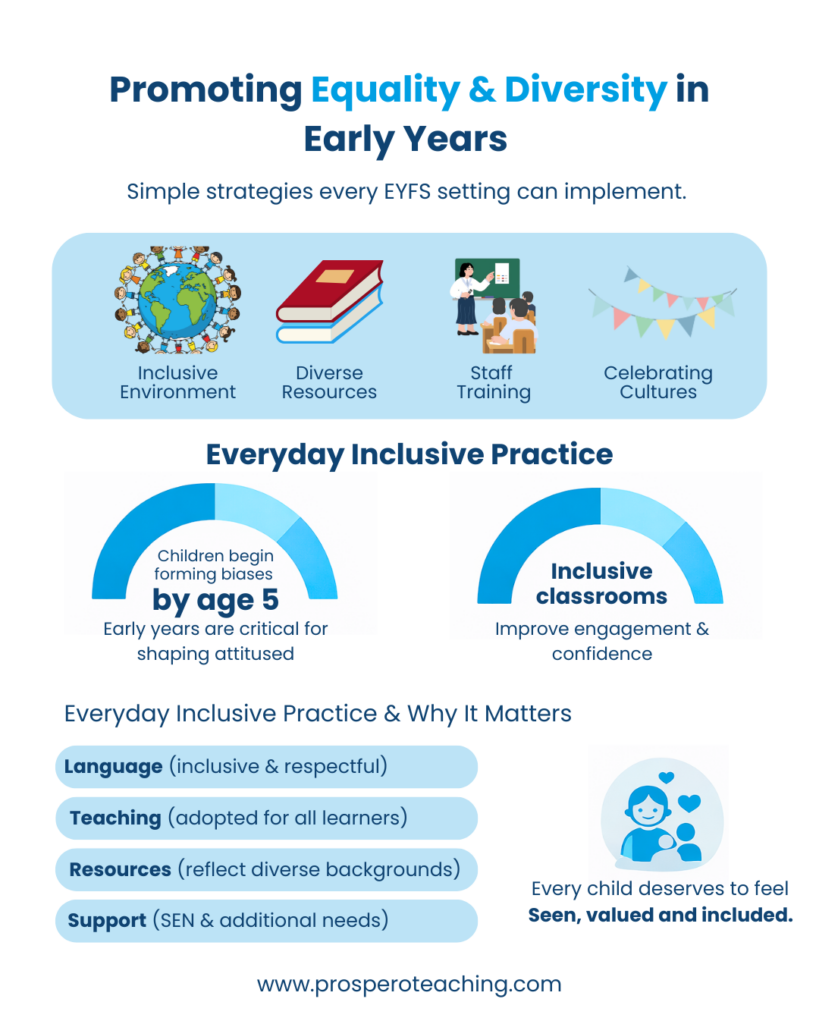
- According to UNICEF, inclusive education improves engagement, confidence, and long-term outcomes.
- Studies suggest children begin forming social biases as early as age 3–5, making early years settings essential for promoting fairness and understanding.
By embedding equality and diversity early, practitioners can positively influence children’s attitudes for life.
Register with us for job opportunities in Early Years
6 Practical Ways to Promote Equality and Diversity in Early Years Settings
1. Create an Inclusive Environment
An inclusive environment is the foundation of equality and diversity.
This means:
- Using resources that reflect different cultures, identities, and abilities
- Displaying diverse imagery and materials
- Encouraging children to share their own experiences
For example, multicultural dolls, dual-language books, and inclusive displays help children feel represented.
2. Provide Diversity Training for Staff
Staff play a key role in shaping inclusive environments.
Providing regular training helps practitioners:
- Understand cultural differences
- Support children with additional needs
- Challenge unconscious bias
You can support this through CPD, with training courses available via Prospero Learning.
3. Use Inclusive Teaching Strategies
Inclusive teaching ensures all children can participate and thrive.
This includes:
- Visual aids and hands-on learning
- Differentiated teaching approaches
- Encouraging group collaboration
These strategies help children learn from each other while developing respect and understanding.
4. Celebrate Cultural Diversity
Celebrating different cultures helps children develop awareness and appreciation of the world.
You can:
- Recognise cultural festivals
- Share stories and traditions
- Involve families in activities
Resources like book lists from educational platforms can help introduce diverse perspectives in a meaningful way.
5. Support Children with Additional Needs
Inclusion means ensuring all children can fully participate in learning.
This includes:
- Supporting children with SEN (Special Educational Needs)
- Providing accessible resources and environments
- Working closely with families and specialists
Creating inclusive spaces benefits all children, not just those with additional needs
6. Develop Inclusive Policies and Procedures
Strong policies help embed equality and diversity into everyday practice.
Settings should:
- Regularly review policies
- Align with the Equality Act 2010
- Ensure staff understand and apply them consistently
Clear policies create a framework for inclusive, respectful environments.
Examples of Inclusive Practice in Early Years
Here are some simple but effective ways to embed equality and diversity daily:
- Providing diverse books and learning materials
- Encouraging children to share their experiences
- Using inclusive and gender-neutral language
- Promoting positive interactions between children
- Adapting activities for different learning needs
If you are on the lookout for a new role, you can view all our latest school vacancies here.
Our specialist consultants are always happy to help you on their career journey – register and we’ll get in touch with you. In the meantime, why not try our free CPD-accredited training courses?
Want More Teaching Blogs?
Teaching Blog
No results found.....