UK Resignation Deadlines Permanent vs Temporary Roles


When resigning from your job, it is highly unlikely that all you have to do is hand in your notice and count down the days. In the UK, resignation deadlines can have a real impact on your pay, future opportunities, and even whether you’re allowed to return to a role later on.
What many workers don’t realise is that resignation deadlines work very differently depending on whether you’re a permanent employee, a temporary worker, or working through an agency. Miss the wrong deadline, and you could lose income, breach a contract, or limit future options. That’s why we have created this blog to highlight the importance of being aware of these key dates and break down what you actually need to know.
What is a Resignation Deadline?
A resignation deadline is the latest date you can formally resign from a role while still meeting your contractual notice requirements.
In simple terms, it determines:
- When you must submit your resignation
- How long do you need to keep working after resigning
- Whether you leave “cleanly” under your contract
Your resignation deadline depends on:
- Your employment type
- Your contract terms
- Your notice period
- In some cases, industry-specific rules (education is a big one!)
Why Resignation Deadlines Matter More Than You Think?
Missing a resignation deadline doesn’t typically land you in legal trouble, but it can cause real problems.
Depending on your roles, it may affect:
- Final pay or holiday pay
- Future references
- Eligibility for future roles
- Agency availability
- End-of-term or end-of-assignment pay
This is especially important for workers in education, healthcare, and contract-based roles, where deadlines are often fixed.
Find out more!
Resignation Deadlines for Permanent Employees?
If you’re a permanent employee, your resignation deadline follows a clear and structured process.
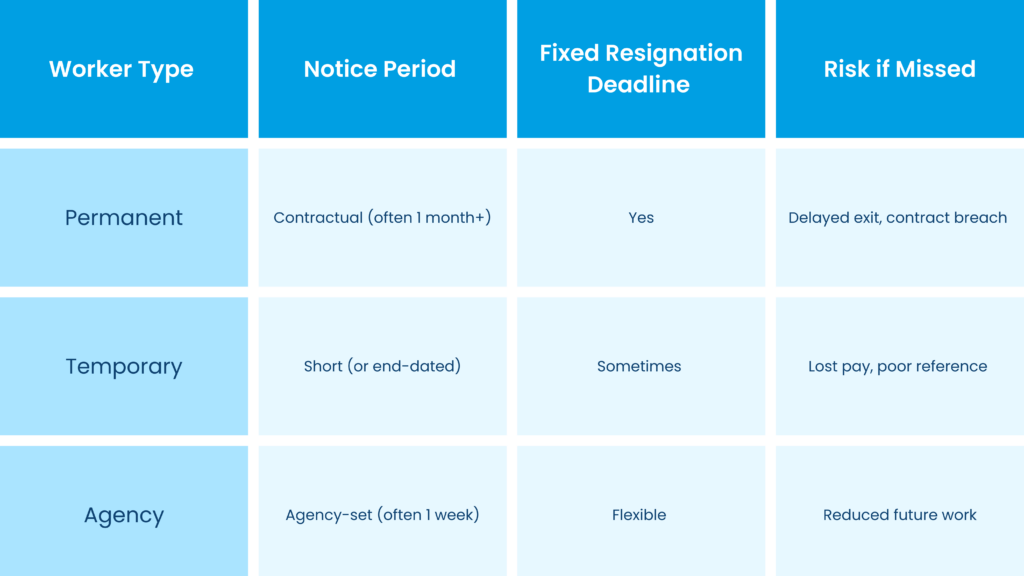
Your contract sets out your notice period. In most cases, this is one week, one month, or sometimes longer, depending on your role and length of service. Your resignation deadline is the latest date you can hand in your notice while still meeting that notice requirement.
For example, if your contract requires one month’s notice and you plan to leave your role by 31 July, you usually need to submit your resignation by 30 June. This gives your employer their full notice period and allows you to leave on your intended date without complications.
Sector-Specific Resignation Deadlines (Especially in Education)
For teachers and many permanent school-based staff in the UK, resignation deadlines link directly to fixed end-of-term leaving dates. These most commonly fall on:
-
31 August (end of the summer term)
-
31 December (end of the autumn term)
-
30 April (end of the spring term, often overlooked)
If you miss the relevant resignation deadline, your contract usually rolls forward to the next permitted leaving date. This can mean staying an extra half term or even a full term, depending on when you realise.
Resignation Deadlines for Temporary Workers?
Temporary workers often assume resignation deadlines don’t apply to them — but that isn’t always true. While temporary roles usually offer more flexibility, contracts still govern them, and those contracts often include notice and early termination rules.
Most temporary contracts set shorter notice periods and link the role to a specific end date. That flexibility can make leaving feel easier, but it doesn’t remove the rules altogether. Your resignation deadline usually depends on:
- whether the contract allows early termination
-
whether it specifies a notice period
-
whether you work directly for the organisation or through an agency
Can Temporary Workers Resign Immediately?
Sometimes, but not always. Resignation deadlines still matter for temporary workers; they’re simply shorter and more flexible.
Many temporary contracts include:
-
One week’s notice
-
Immediate termination clauses
-
End-date completion expectations
If you leave without checking your contract:
-
You could lose final pay
-
Your employer may record you as having “left early”
-
You could affect future placements
Resignation Deadlines for Agency Workers?
Agency workers sit in a slightly different category, and this is often where the most confusion comes in. A big reason for that is understanding who you’re actually resigning from. In most cases, your contract is with the agency itself rather than the school, business, or workplace where you’re placed. That means your resignation deadline is tied to your agreement with the agency, not the assignment location, and some placements can end without a formal resignation at all.
However, this is where many people get caught out. Even if an assignment ends naturally, you’ll usually still need to give notice to the agency if you want to stop working altogether. Most agencies ask for around one week’s notice, usually in writing. An email is normally enough, and they may expect you to complete any confirmed bookings where possible.
If you simply stop accepting work without formally resigning, you may not technically be breaching your contract, but it can still have consequences. It can damage your relationship with the agency and, in some cases, lead to you being deprioritised for future roles if you decide to return later on.
Permanent vs Temporary vs Agency: A Clear Comparison
Common Mistakes People Make with Resignation Deadlines
- Assuming notice doesn’t apply to temporary role.
- Missing term-based deadlines in education.
- Not resigning formally with an agency.
- Only telling the workplace, not the employer.
- Waiting until the “last minute” without checking the contract.
Most issues are avoidable with a quick contract check.
How to Check Your Resignation Deadlines Properly
Before handing in your notice, it’s worth taking a few minutes to double-check the basics. Have a proper look at your contract, paying close attention to your notice period, any fixed end dates, and whether there are clauses about early termination. Once you’re ready to resign, make sure you do it in writing and keep a copy of your resignation email for your records. If anything is unclear, ask before you act; it’s always far better than guessing and running into issues later on.
What Happens if You Miss a Resignation Deadline?
If you miss a resignation deadline, the outcome is usually more inconvenient than dramatic. In most cases, you’ll be expected to work a longer notice period, and your planned leaving date may shift, which can limit your flexibility if you were hoping to move on quickly.
Legal action is extremely rare, and financial penalties only apply if they’re explicitly written into your contract. For most people, the real risk isn’t lawsuits or fines, it’s the potential impact on your professional reputation and future references.
Final Thoughts: Know Your Worker Type, Know Your Deadline!
Resignation deadlines aren’t just a bit of admin; they play a big role in how smoothly you’re able to move on to your next role. Whether you’re working in a permanent position, a temporary role, or through an agency, understanding your contract, knowing your notice period, and communicating clearly can make all the difference. Getting it right helps you leave on good terms, protects your future opportunities, and saves you a lot of unnecessary stress along the way.
Looking for your next role?
Teaching Blog
No results found.....